Vegetarian in Dominica

promoting vegetarian and vegan lifestyles in Dominica

Sapodilla

Posted by Trudy Prevost on May 17, 2013

It is always exciting to see these fruits come into season; they are like this natural sweet candy fruit.

Also called naseberry

The naseberry is native to Central America and the Caribbean. The Indians of Mexico originally called the tree ‘sapodilla’, a name that is retained in many parts of the region. The fruit is round in shape and has a reddish brown skin. When ripe, the fleshy pulp may be eaten or used to make custard and ice-cream. The early Indians chewed the rubbery sap of the tree, which they called ‘chicle’ and it was this – with the addition of massive amounts of sugar – that New Yorker Thomas Adams managed to make into successful commercial product – chewing gum.

Posted in LOCAL FOODS | Leave a Comment »

New study showing how eating meat clogs arteries

Posted by Trudy Prevost on April 13, 2013


I have studied Healthy Lifestyles for over 40 years now and it is so interesting to see the change in people’s attitudes towards this way of living. I was considered a quack; a fanatic; an abusive mother; a hippie; and now – my lifestyle is on the forefront of scientific study! Oh joy!

As a vegetarian and someone who refrains from processed foods and chemical foods I have not consumed much meat or sports drinks in my lifetime – and now science backs up my decision.

Cleveland Clinic researchers found that when processed in the gut, carnitine (abundant in red meat and added to popular energy drinks) is metabolized to trimethylamine-N-oxide (TMAO), a compound linked to clogged arteries (atherosclerosis).

These foods are body altering – in a negative way. A diet high in carnitine shifts our gut “biology” so meat eaters actually generate more TMAO and compound their risk of cardiovascular disease.

This study was released in April 2013 – and it seems the more you indulge the greater your risk – my Nanny always said “moderation”.


http://health.clevelandclinic.org/2013/04/protect-your-heart-limit-red-meat-video/

Posted in BENEFITS, Heart, NEWS, Recent Studies | Tagged: , , , , , , , , , | Leave a Comment »

Vegan Snack Bar

Posted by Trudy Prevost on March 13, 2013

STONE LOVE

333

Stone Love produces delicious healthy food in a cute little space in Roseau. It is about a half block from the old Shillingford Grocery Store with the blue roof.

340

They offer foods you cannot get anywhere else; gluten free roti; bush tea juices; vegetarian burgers (non soya); vegan desserts. I love their soups.

They serve their specials on a rotating basis so keep in mind not all menu offerings are served every day.

They put a lot of love into their food; you can taste it!

331

Because there is no meat or dairy in the cooking area all foods are kosher.

Posted in RESTAURANTS, Vegan Restaurants, Cafes and Catering | Tagged: , , , , , , , , , , | Leave a Comment »

Grilling Meat

Posted by Trudy Prevost on October 28, 2012

In the last 10 years barbequed meat stands have sprung up all over the island. Some are right on the sidewalk! I wonder how this affects our centenarian rate.

Barbecuing meat creates the cancer-causing compounds polycyclic aromatic hydrocarbons (PAHs) and heterocyclic amines (HCAs). When fat drips from the meat onto the hot grill, catches fire, and produces smoke, PAHs form. That’s what’s contained in that charred mark we all look for on our burger.

HCAs form when meat is cooked at a high temperature, which can occur during an indoor cooking process as well.

The National Institute of Health, Dept. of Health and Human Services included heterocyclic amines, chemicals created during the grilling of meat to their hit list of cancer causing agents in 2005 – I thought for sure I would see the consumption of this kind of meat lower but I have not hardly saw anyone talk or write about it – therefore this article.

Heterocyclic amines and polycyclic aromatic hydrocarbons are chemicals that are formed during the grilling and frying and barbecuing of certain so called “muscle meats” such as beef, pork, poultry and fish.

There are studies out linking these chemicals to Breast Cancer; Prostrate Cancer; Colorectal Adenomas; Renal Cell Carcinoma; …. the list goes on

According to the National Cancer Institute:

  • Heterocyclic amines (HCAs) and polycyclic aromatic hydrocarbons (PAHs) are chemicals formed when muscle meat, including beef, pork, fish, and poultry, is cooked using high-temperature methods, such as pan frying or grilling directly over an open flame.
  • The formation of HCAs and PAHs is influenced by the type of meat, the cooking time, the cooking temperature, and the cooking method.
  • Exposure to high levels of HCAs and PAHs can cause cancer in animals; however, whether such exposure causes cancer in humans is unclear.
  • Currently, no Federal guidelines address consumption levels of HCAs and PAHs formed in meat.
  • HCA and PAH formation can be reduced by avoiding direct exposure of meat to an open flame or a hot metal surface, reducing the cooking time, and using a microwave oven to partially cook meat before exposing it to high temperatures.


Posted in NEWS, Recent Studies | Tagged: , , , , , , , , , , | Leave a Comment »

Eat Local Eat Healthy Eat Papaya

Posted by Trudy Prevost on September 6, 2012

Papaya (Carica papaya), known locally as pawpaw, is from a family of plants that have a milky white sap or latex. Originally from southern Mexico, Central America and northern South America, papaya is now cultivated in most countries with a tropical climate.

The ripe papaya is a rich orange colour with yellow or pink hues. The ripe fruit is delicious – usually eaten raw, without the skin or seeds. It is an ideal food for invalids because the flesh is easy to chew and swallow. The indigenous peoples of the Caribbean are recorded to have eaten ripe papaya after meals believing it to promote digestion. They knew from observation that it had properties that aided the digestion of food.

Ripe papaya is an excellent source of vitamin C and flavanoids. It is a very good source of the anti-oxidant carotene which is converted to vitamin A in the body.  It is a good source of folate, potassium, and dietary fiber and contains vitamin E, various B vitamins, pantothenic acid and vitamin K. It contains calcium and iron in small amounts and traces of iron, phospherous, zinc, copper, selenium and manganese.

Ripe papaya is often eaten opened and de seeded. Add a little lime juice for a change of flavour. Ripe papaya can be blended into smoothies and juices. I like to create papaya balls with a melon baller and add them to fruit salads. Add them just before serving so the other fruits do not get soft.  Another of my favourite ways to eat papaya is as raw pawpaw porridge; a flavourful healthy start to the day. Papayas have a relatively high amount of pectin, which can be used to make jams and jellies.

Recently dried ripe papaya has become popular as a snack food; there is 1 or 2 companies on island doing this and it is the most amazing healthy snack.  This is an area we need to expand in Dominica. When buying dried papaya buy the darker unsugared and sulphured kind – much more nutritious.

The seeds of the papaya are edible and have a hot, spicy taste. They are ground and eaten as a condiment; rather like black pepper.

The unripe green fruit can be eaten raw or cooked; like a vegetable in curries, soups and stews.

Green papaya does not contain carotene but has a nutritional content similar to ripe papaya except it is a significantly better source of potassium and a slightly better source of iron.

In some countries the leaves are eaten steamed or boiled like spinach

 In others the flower buds are sautéed or stir fried.

Historically the papaya has been used medicinally in many different ways.

The latex of the papaya is especially rich in the enzyme called papain that catalyzes the breakdown of proteins. This enzyme is in all the parts of the plant but concentrated most strongly in the green papaya. It can be used in an incredibly wide variety of ways.

Papain is used in: bio-chemical laboratory research, commercial meat tenderizers, clotting milk, shrink proofing wool, toothpastes, mints and enzyme-action cleansing agents for soft contact lenses.

Papain is sold in tablet form as a digestive enzyme. It is said to be helpful in: digestive disorders such as acidosis, heartburn, indigestion, inflammatory bowel disorders and some doctors recommend it for stimulation of the appetite. No need to take a papain tablet to aid digestion of proteins with green pawpaw around.

Other experts recommend it for complications of diabetes, stimulation of immune response, some cancer treatments, sinusitis, arthritis, trauma, edemas, inflammation and to inhibit bacterial growth. Papain exhibits pain relieving properties and the US food and drug administration (FDA) has approved its medicinal use to ease the discomfort of slipped discs. Those with celiac disease, who have difficulty digesting wheat protein, can often tolerate it if it is treated with crude papain. It may help dyspeptic patients as papain can help in the digestion of proteins.

It has been used in: cleansing and healing of wounds, prevention of scar formation, the Mayans wrapped wounds with the leaf. Papain can be made into an immediate home remedy treatment for jellyfish,  stingray and insect stings, wounds and many other skin conditions.  The highest concentration of this substance is on the skin of unripe papayas.  Cut the skin and apply it directly to the affected area.

Papaya seeds are traditionally used as a vermifuge, or dewormer. I have eaten them over my lifetime in small amounts once in a while as a preventative of parasitic infestation.

In some areas of Dominica women have traditionally used the seeds as a contraceptive. Recent studies have proven this to be valid with one study on rabbits showing the seeds to be a reversable contraceptive. Sperm concentration showed a gradual decline, reached severe oligospermia (fewer than 20 million/mL) after 75 days treatment, and attained uniform azoospermia after 120 days treatment. Sperm motility and viability were severely affected after 45 days treatment and reached less than 1% after 75 days treatment. The effects were comparable in the two dose regimens and were restored to normal 45 days after withdrawal of the treatment. No toxicity was evident; the libido of the treated animals was unaffected yet the fertility rate was zero.

Once again we see medical science is often based on traditional medicine concepts.

So many interesting ways to more completely utilize the papaya we grow here.

The small orange papayas with seeds are the heritage papayas of the island. They are incredibly flavourful and filled with carotene. Purchasing them instead of the huge pinkish and light orange papayas without seeds will help to conserve the heritage foods of the island.

Interesting Facts

The scent of the ripe papaya is offensive to some people.

The latex fluid can cause irritation and provoke allergic reaction in some people.

The papaya fruit and leaves contain carpaine, an anthelmintic alkaloid which could be dangerous in high doses.

Excessive consumption of papaya, like of carrots, can cause the yellowing of soles and palms.

Medical research in animals has shown contraceptive and abortive properties but most experts say papaya will not cause miscarriage in small, ripe amounts.

In traditional animal medicine papaya latex and/or seeds have been used as a dewormer. Recent studies have shown the validity of this folk remedy also.

Carica papaya was the first transgenic fruit tree to have its genome deciphered.

In the 1990s, the papaya ringspot virus threatened to wipe out Hawaii’s papaya industry completely; badly affecting the farmers with huge fields mono cropped with papaya. The small farmer who planted their papaya interspersed with other crops were not affected nearly as badly. Genetically altered plants were created that had some of the virus’s DNA incorporated into the DNA of the plant and gave patented ownership to the seed companies. Farmers were no longer allowed to save their own seeds.   And while the two commercially available genetically modified varieties, “SunUp” and “Rainbow,” have seemed to have helped control the virus, farmers have found the genetically altered varieties appear more susceptible to funguses than the most common “natural” papaya. UH researchers knew the new SunUp and Rainbow strains were more susceptible to phytophthera when they released the new seed to the public. An Agronomist Steve Ferreira told the Hawaii Island Journal about that susceptibility in April of 2001.

A new study has raised questions about whether the altered genes in the new papayas could be allergenic to humans.

In 2004, it was found that papayas throughout Hawaii had experienced hybridization with the genetically modified varieties and that many seed stocks were contaminated. Small farmers have had to destroy 1000′s of plants or be sued by the owners of the genetically modified plants. By 2010, 80% of Hawaiian papaya plants were genetically modified.

Plenty Papaya Problems

For more information on healthy lifestyles contact 245-2474 or 317-4981, rainbowyoga@yahoo.com.

Posted in Fruits, LOCAL FOODS | Tagged: , , , , , , , , , , , , , , , , | 1 Comment »

Vanilla

Posted by Trudy Prevost on August 9, 2012

“The relationship between this bee and the orchid is crucial to the production of vanilla. We must keep this in mind because if we keep on using agricultural chemicals we could possibly end up pollinating everything by hand!”

Hillborn and I are growing vanilla – it has been so much fun – what an amazing plant! In flowering season each morning we are greeted with a bright new beautiful flower with the potential to make a vanilla pod to tantalize the flavour buds in months to come!

You must live in the moment with this plant for if you decide to go on with daily life and savour the flower later – it will be gone!

When you consider farmers have only one morning to delicately hand touch the male and female parts of the flower together, perhaps while balancing in a tree – you know why this vine orchid spice is one of the most expensive spices after saffron (Crocus sativus).

I can remember one organic vanilla bean in a glass tube costing $10 CDN in  in the past but the price fluctuates with climatic conditions and I have recently priced a similar product at $5.

I knew from previous studies that vanilla had to be fertilized by hand – it seems they took the plant from MesoAmerica (Mexico) but they found the plant would not reproduce without a bee called the Melipona Bee. Mother nature is so amazing! Human kind are remarkably short sighted!

The relationship between this bee and the orchid is crucial to the production of vanilla. We must keep this in mind because if we keep on using agricultural chemicals we could possibly end up pollinating everything by hand!

It is said hummingbirds can also pollinate these flowers but we have lots of those here in Dominica yet we have to hand pollinate all our vanilla.

Vanilla planifolia flowers are hermaphroditic: they carry both male (anther) and female (stigma) organs; however, to avoid self-pollination, a membrane separates those organs.

For years they could not figure out a viable way of getting these vines to produce outside of Mexico until a young 12 year old boy named Edmond Albius, from Réunion found a way to manually self-pollinate the plant so it could be grown elsewhere.  His technique remains the main way Vanilla is hand-pollinated today but he died a poor man.

To get vanilla you not only have to know how to hand pollinate it but you also have to be alert in flowering season as the flowers last less than a day and must be pollinated or they fall off and don’t make a bean. One flower produces one bean.  They flower in a cluster but only one flower comes out at a time. Each day a new flower comes out early morning lasts a day then dies; this flower must be hand pollinated preferably around mid day. A scientist on line said he had a 30% success rate with hand pollination; mine was only a 20% success rate but still better than last year :)

We planted our vanilla on a mango tree over 7 years ago and then ignored it! It has reached the highest heights of the tree and is now returning to the ground. It has passed over to the neighbouring mango as well. It has only flowered a few times so far.

Left alone vanilla will grow as high as possible on the tree, with few flowers. We should have folded the higher parts of the plant downwards so we could reach the flowers. This is recommended to stimulate flowering.

The pods are usually about 6 or 8 ” long and shorten when they are dried. They are picked green and then dried. The aroma is truly heavenly; I can just sit and inhale it in a thankfful meditation for the scents mother nature gives us. If you split the pod open small black seeds fill the centre – the  ’caviar’ of the vanilla. I scrape these seeds out and use them in foods that I want to impart a strong vanilla flavour but I do not want pieces of vanilla pod in. Then I use the pods in tea or oter dishes where I can throw in a piece of the pod.

Dominica grew a lot of vanilla in the past; many farms have vanilla vines in their citrus fields to this day. In the 1940′s we had a Vanilla Growers Associaton. Towards the end of the second World War it was a major crop. It is said a fire which destroyed a whole season’s crop and the devious practice of a few farmers in substituting White Cedar (Powier) pods for vanilla beans contributed to the downfall of this crop. I would imagine the invention of artifical vanilla essence – this industrial waste product could be produced at a fraction of the cost – had a lot to do with the fall of the market too.

Processing of vanilla has the following steps:

Pods are wilted for 24 hours, the “preliminary” fermentation. Then sun dried, a continuous fermentation. The pods become dark brown. At this point many keep pods in blankets, called sweating, for 8–12 days.

The pods may be sold separately or in alcohol as tincture/extract of vanilla.

Natural vanilla is much better flavored than the synthetic and many compounds seem to be involved in the fermentation.

The nutritional benefits of real vanilla are many.

Posted in LOCAL FOODS, Spices | Tagged: , , , , , , , , , , | Leave a Comment »

Food of 7 Vegan Restaurant

Posted by Trudy Prevost on August 7, 2012

“The human being is not just a part of  planet earth   but a part of the entire universe and the process of  knowing self  begins by  realizing  that we are not a separate  unit but part of a whole.” ~ The Sugar Baby; author: Hon.Priest Kailash K Leonce Chairman The Great Physician International 

This vegan restaurant is located on King Henry V Street just across from the Loubiere Bus Stop and beside the Peace Corps and OAS offices.

I stopped by for lunch recently and it was just delicious.

They offer unsweetened juices; green juice; citrus juices along with healthy breakfasts and lunches.

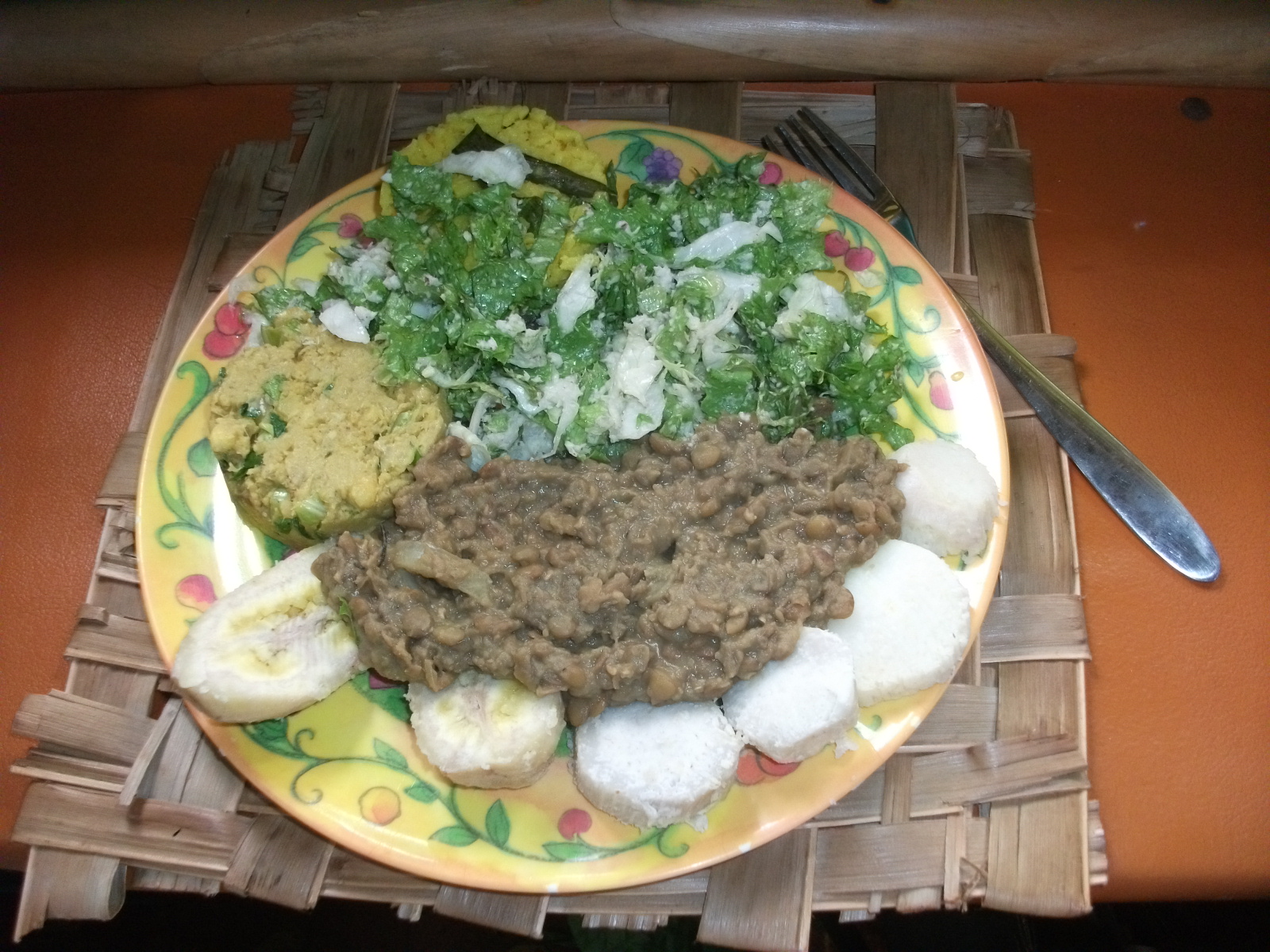
The lunch plate is $20 - there was a spelt pasta dish; salad; provisions and beans.

You can purchase health foods such as quinua or spelt pasta and herbal preparations.

They are open during the week and closed on the weekend; hours:

Monday to Thursday 7 am to 7 pm;

Friday 7 am to 3 pm.

For more information check out their website

The Food of 7 Vegan Restaurant

Posted in Vegan Restaurants, Cafes and Catering | Leave a Comment »

Rootz Healing Foods

Posted by Trudy Prevost on August 13, 2011

Unfortunately this restaurant is now closed.

This is the only vegan restaurant in Roseau right now. As I went yesterday I noticed this sign:

Great meal again; well rounded with raw salad foods; breadfruit; green fig; lentils; sweet potato; rice …. nutritious and delicious!

Roots Healing Foods
53 Kennedy Ave.
Roseau
Beside Black’s Barbershop and La Plaine Bus Stop

Posted in Vegan Restaurants, Cafes and Catering | Tagged: , , , , , , , , | Leave a Comment »

Eat Local! Eat Healthy! Eat Kenip

Posted by Trudy Prevost on August 11, 2011

Kenip season is in full swing in Dominica; sidewalk stands offer a wide variety of sizes and shapes; sellers calling sweet kenip; sweet kenip as people pass by. They sell them by the roadside too for those who want a healthy snack while driving although I find some of the locations a little dangerous.

For just a dollar or two we can get a delicious nutritious snack that nourishes us and gives us energy.

Kenip (Melicoccus bijugatus) is a large tree from the Sapindaceae family originally thought to be from tropical America, related to the litchi (lychee), rambutan, akee and soapberry.

Names for this fruit abound – when I was studying nutrition and cooking in the Caribbean every island seemed to have a different name! To name just a few: Chenette in Trinidad; Mamoncillo in Cuba; Guinep in Greneda; Honeyberry in Guyana; Knepe in French West Indies or Spanish Lime in Florida and the Dominican Republic. To make it more confusing some islands have more than one name!

The fruit resembles a small green lime growing in clusters. The green skin is thick, leathery, slightly brittle and surrounds a thin layer of salmon or yellow coloured flesh enclosing a seed or seeds. The flesh is soft, translucent, juicy and refreshing. Flavor varies from sour to semi-sweet. In most fruits there is a single, large, yellowish-white, hard-shelled ovid seed, while some have 2 hemispherical seeds. The kernel is white, crisp, starchy, and astringent.

Kenip is mainly eaten raw and the kernels of the seeds are roasted and eaten like nuts.

This fruit is one of those very special eating experiences in Dominica. When you gently squeeze the skin and a lovely juicy fruit pops out to be sucked and rolled around in the mouth until all the pulp is gone it is a small taste of heaven! No wonder they call it fruit/mouth candy!

The fruits are also used to make jams, jellies, juices and ice cream and a liquor called “bilí”.  In the southern areas of Mexico, it is generally eaten with chili powder, salt, and lime. Indians of the Orinoco consume the cooked seeds as a substitute for cassava.

The seeds of this fruit are viable and can make babies unlike many fruits we eat! A high proportion of the fruits we eat are hybrids and are unable to reproduce!

Nutritionally this fruit is high in: tryphtophane which can help you sleep well, enhance feelings of well being, satisfy hunger and lysine which helps build muscles and stimulates growth hormone. It also contains calcium and phosphorous and lots of vitamin C. The University of Bonn says it is a good source of iron.

The Amerindians made a dye from the juice of the raw fruit which makes an indelible stain.

If you want to attract hummingbirds and honeybees to your garden they love the flowers of this tree. The tree is esteemed by Jamaican beekeepers; the honey is somewhat dark in color but of agreeable flavor.

InPanama, the leaves are scattered in houses where there are many fleas. It is claimed that the fleas are attracted to the leaves and are cast out with the swept-up foliage. Some believe that the leaves actually kill the fleas.

 The heartwood is yellow with dark lines, compact, hard, heavy, fine-grained; inclined to decay out of doors, but valued for rafters, indoor framing, and cabinetwork.

InVenezuela, the roasted seed kernels are pulverized, mixed with honey and given to halt diarrhea. The astringent leaf decoction is given as an enema for intestinal complaints. In Jamaica UWI studies recorded Guinep was traditionally used for hypertension, fever and cough.

Caution there is a choking hazard for young children.

According to Caribbean folk wisdom (especially in Jamaica), we learn the art of kissing by eating the sweet flesh of this fruit.

By the way – find a local stand pipe or other place to wash your kenip if you open them with your teeth.

Eat local! Eat healthy! Eat Kenip!

This information is not meant to replace the knowledge and wisdom of an MD. For more information on healthy lifestyles contact Rainbow Yoga Health and Wellness at rainbowyoga@yahoo.com.

Posted in Fruits, LOCAL FOODS | Tagged: , , , , , | Leave a Comment »

Processed Meats and Disease

Posted by Trudy Prevost on May 21, 2011

I am a dedicated vegetarian who has never once craved meat in over 35 years. I feel everyone has to listen to their body and perhaps some people do need some meat to survive; especially when living msustainably from their environment.

In August 2006 a University in Sweden published a ’meta-analysis’ in the Journal of the National Cancer Institute, collating 15 studies covering 4,704 subjects during the period 1966 to 2006. They found the risk of developing stomach cancer increases by between 15% and 38% when consumption of processed meat products increases by just a half-portion per day.

Results of a study by the Cancer Research Center of Hawaii and the University of Southern California reported in the Journal of the National Cancer Institute (2005;97:1458-65) of 190,000 people, ages 45 to 75, for seven years state that those who ate the most processed meat (bacon, ham, cold cuts) had a 68% higher risk of pancreatic cancer than those who ate the least. “Most” was defined as at least 0.6 ounce processed meat, one ounce beef or 0.3 ounce pork per 1,000 calories consumed.

Read more:

http://today.msnbc.msn.com/id/16361276/#ixzz0rjS2Z75d

tp://news.bbc.co.uk/2/hi/health/8688104.stm

http://www.naturalnews.com/028824_processed_meat_heart_disease.html

Higher Risk of Heart Disease, Diabetes from eating Processed Meats

Posted in BENEFITS, Disease Prevention, NEWS, Recent Studies | Tagged: , , | Leave a Comment »

 
Follow

Get every new post delivered to your Inbox.